What a Tune-Up Actually Includes
“HVAC tune-up” is one of the most loosely-used terms in the industry. Some shops mean a 20-minute filter swap and visual inspection. Others mean a full multi-hour combustion analysis with electrical testing. The price tags are similar; the value is wildly different.
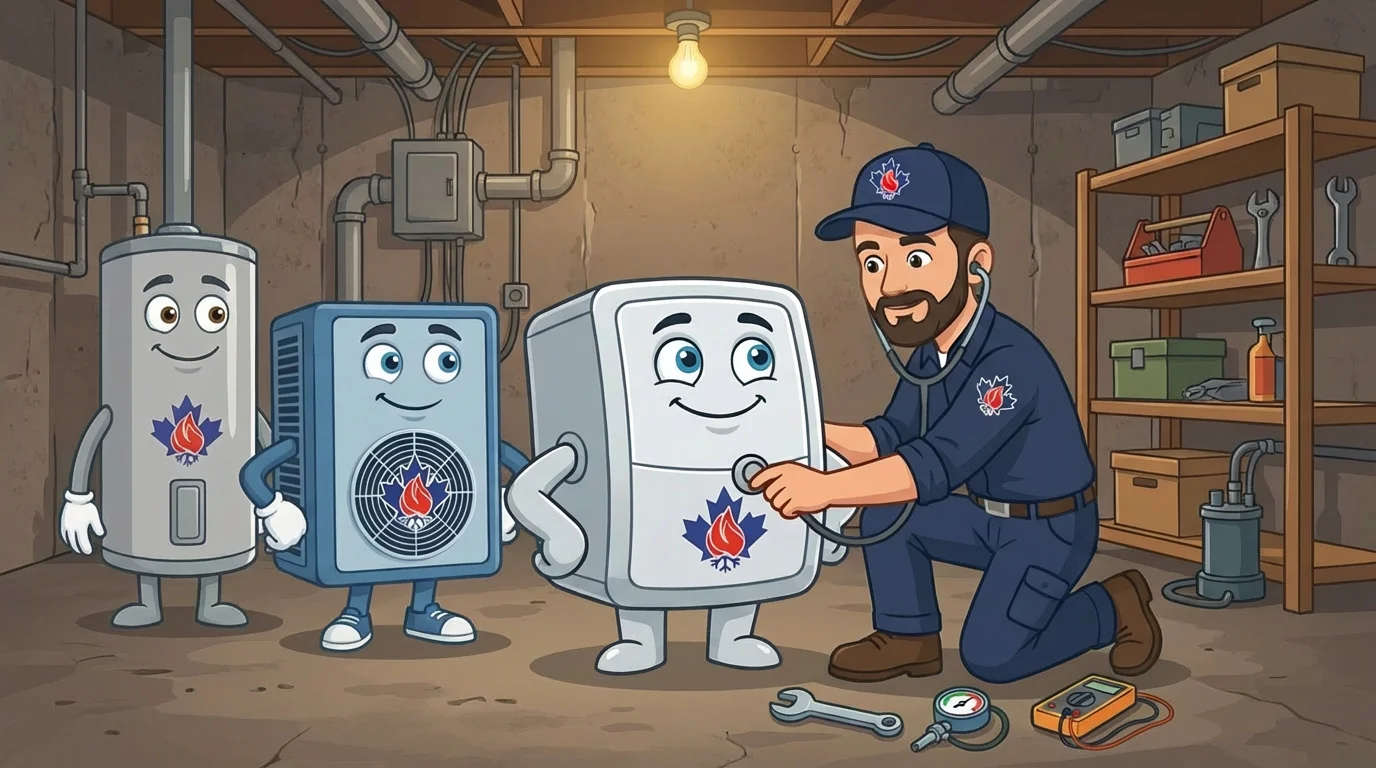
This post is the actual checklist we work through on a pre-fall tune-up visit in Chilliwack - what gets inspected, what gets measured, what gets adjusted, and what problems get caught early. The goal is to give homeowners a clear picture of what they should expect to see and ask for when booking furnace or heat pump fall service.
Why Fall (And Not Winter or Spring)
Three reasons fall is the right tune-up window for Chilliwack homes:
- Heating system has been idle for 5+ months. Components develop problems during idle periods that need to be caught before the system is asked to perform.
- Cooling-mode wear is fresh. Anything that broke or weakened during summer is still recent and easier to diagnose.
- Service availability is good. Booking in September or early October gets you flexible scheduling. By November, every shop is in reactive emergency mode and tune-up appointments push to December or later.
The cost of finding a problem in September is the cost of fixing it. The cost of finding the same problem in January is the cost of fixing it plus the cost of an emergency call plus whatever happened to the home while waiting for service.
The 14 Checks We Run on a Chilliwack Tune-Up
1. Combustion Analysis (Gas Furnace and Boiler)
For gas systems, this is the single most important inspection. A combustion analyzer measures the percentage of CO, CO2, and oxygen in the flue gases. Any one of these reading outside spec indicates incomplete combustion - which means efficiency loss at best and CO leakage at worst.
What we measure: CO ppm, CO2 percentage, stack temperature, draft pressure, excess air ratio. We adjust gas pressure or burner orifice if any reading is out of range.
2. Heat Exchanger Inspection
Visual inspection of the heat exchanger for cracks, corrosion, or rust. On furnaces 12+ years old, this is the single failure mode that justifies replacement regardless of how the rest of the system looks - a cracked heat exchanger leaks combustion gases including CO into the home’s air supply.
For furnaces older than 15 years, we use an inspection mirror and bright light. For newer furnaces with sealed heat exchangers, we rely on combustion analyzer readings to detect early-stage cracking.
3. Refrigerant Pressures (Heat Pump and AC)
For heat pumps and central AC, we measure suction and discharge pressures at the service ports. Pressures outside the manufacturer’s range indicate refrigerant charge issues - either undercharge (often a slow leak) or overcharge from prior incorrect service. Either compromises efficiency and accelerates compressor wear.
4. Electrical Connections
Every electrical connection on the unit gets visually inspected and torque-checked: capacitor terminals, contactor terminals, control board connections, line voltage connections, low voltage thermostat wiring. Loose connections are the leading cause of “intermittent failure” complaints.
5. Capacitor Health Check
Capacitors are the small cylindrical components that help start the compressor and fan motors. They degrade with age and are a $40 to $90 part that, when failed, prevents the system from starting at all. We test capacitance against rated value - anything below 90% of rated is replaced preventively.
6. Blower Motor and Squirrel Cage
The blower motor is responsible for moving conditioned air through your ducts. We check amp draw against rated load (high amp draw indicates a struggling motor), inspect the squirrel cage for dust accumulation, and verify proper airflow direction.
Dust on the squirrel cage is a common find on tune-ups - especially in Chilliwack rural homes where the air carries more agricultural dust during the summer. A buildup of even 1 cm reduces airflow significantly.
7. Condensate Drain Flushing
The condensate drain carries moisture out of the system during cooling and (for high-efficiency furnaces) during heating. Algae, slime, and mineral buildup in the drain line are the leading cause of summer flooding events and shoulder-season fault codes.
We flush the drain with a wet-vac or compressed air, then add a drain treatment tablet for ongoing protection.
8. Filter Inspection and Replacement
Filters get inspected and replaced as needed. We also check the filter slot for proper sealing - poorly sealing filter slots allow unfiltered air to bypass the filter, which defeats the purpose entirely.
9. Thermostat Calibration
We verify that the thermostat reads ambient temperature accurately, that the configuration matches the system type (single-stage, two-stage, modulating, dual-fuel), and that the heating and cooling cycles trigger at the correct setpoints. Misconfigured thermostats are common after smart-thermostat upgrades.
10. Outdoor Coil Cleaning
For heat pumps and ACs, the outdoor coil gets a thorough rinse and inspection. Bent fins are straightened with a fin comb. Excessive corrosion or damage is documented. This step is particularly important for Chilliwack rural homes that accumulate agricultural dust over summer.
11. CO Detector Verification
We test every accessible CO detector in the home. Detectors older than 7 years are flagged for replacement (CO sensor sensitivity degrades over time even when the unit appears functional). Battery-only detectors get fresh batteries.
12. Gas Pressure Verification
For gas furnaces, we measure inlet and manifold gas pressure with a manometer. Pressures outside the manufacturer’s range indicate either supply-side issues (uncommon but worth checking, especially in rural Chilliwack on propane) or regulator problems (more common).
13. Defrost Board Diagnostic (Heat Pumps)
For heat pumps, we verify the defrost board is functioning correctly by inducing a defrost cycle through the diagnostic mode. We measure defrost thermistor resistance, verify the reversing valve solenoid operates, and confirm proper indoor blower lockout during defrost.
14. Auxiliary Heat Strip Test (Heat Pumps with Electric Backup)
For heat pumps with electric auxiliary heat, we verify each strip element draws the rated amperage when energized. Failed elements are common after summer idle and often go undetected until cold weather forces auxiliary heat to run.
What Problems Tune-Ups Actually Catch
Common findings on Chilliwack fall tune-ups:
- Weak capacitors - 30 to 40% of fall tune-ups identify a capacitor below 90% rated capacitance. Preventive replacement at $80 to $150 saves a $250 emergency call mid-winter.
- Dirty outdoor coils - Especially common in rural Chilliwack near agricultural land. Reduces heating efficiency 10 to 20%.
- Slow refrigerant leaks - Caught at 5 to 10% undercharge before they progress to compressor-damage levels.
- Loose electrical connections - The leading cause of “system stops working overnight then starts again” intermittent complaints.
- Algae in condensate drains - Cleared before they cause summer flooding events.
- CO detectors past their service life - Replaced before heating season makes them critical.
- Failed auxiliary heat strips on heat pumps - Caught before the first cold snap demands them.
What a Tune-Up Costs in Chilliwack
| Service | Typical Cost |
|---|---|
| Standard furnace tune-up | $150 - $220 |
| Standard heat pump tune-up | $180 - $280 |
| Combined furnace + heat pump (dual-fuel) | $250 - $380 |
| Boiler annual service | $180 - $300 |
| Multi-system annual maintenance contract | $300 - $500/year |
Maintenance contracts typically include two visits per year (spring and fall), priority scheduling for service calls, and a discount on parts. For homeowners with both heating and cooling equipment, the math is generally favourable compared to a-la-carte service.
The Chilliwack-Specific Factors
Propane Service Areas
Many homes in rural Chilliwack and the surrounding Fraser Valley areas (Greendale, Yarrow, Rosedale) run on propane rather than natural gas. Propane systems have slightly different combustion characteristics and require gas pressure verification calibrated to propane specs (11“ water column versus 3.5“ for natural gas). Tune-ups on propane systems are otherwise identical, but we verify the propane-specific orifice sizing and combustion adjustments are correct.
Agricultural Dust and Pollen
Chilliwack’s strong agricultural presence means outdoor units accumulate significantly more debris during summer than units in tighter urban environments. Coil cleaning during the fall tune-up is more important here than in coastal Lower Mainland areas - and we charge the same flat rate regardless of how dirty we find the coil.
Larger Properties and Longer Drives
Rural Chilliwack properties (Yarrow, Cultus Lake, parts of Promontory) are further from service hubs. We bundle pre-scheduled fall tune-ups in geographic clusters when possible to keep travel time and cost reasonable. This is one of the reasons we encourage early-September booking - it lets us route efficiently rather than reactively.
Older Farmhouses and Heritage Homes
Chilliwack has a meaningful share of homes built before 1980 with original mechanical systems still in place or partially upgraded. These systems benefit most from regular tune-ups because component-by-component failure is more common than catastrophic failure. The tune-up often surfaces multiple small issues that are inexpensive individually but add up to system-level reliability.
The DIY Portion (What You Can Do Yourself)
Some of the 14 checks have DIY equivalents:
- Filter inspection and replacement - DIY
- Thermostat schedule update - DIY
- CO detector test - DIY
- Outdoor coil rinse (basic) - DIY
- Clearing debris around outdoor unit - DIY
The other nine items - combustion analysis, refrigerant pressures, electrical torque checks, capacitor testing, defrost diagnostics, gas pressure verification, condensate flushing, motor amp draw, heat exchanger inspection - require specialized tools and training. These are what justify the tech visit.
Bottom Line
A real tune-up is not a filter swap and a wave of a clipboard. It is 14 specific checks across combustion, refrigeration, electrical, mechanical, and safety systems - each with measurable outcomes and concrete next steps for any out-of-spec readings.
For Chilliwack homeowners, fall is the right window - service availability is good, the heating system has been idle long enough that problems can be caught before they become emergencies, and the agricultural-dust burden on outdoor units is at its annual peak.
If you want a tune-up that actually covers all 14 items, call 604-991-4894 or send us a message. We service Chilliwack and the surrounding Fraser Valley including Yarrow, Rosedale, Cultus Lake, and Promontory. Early-September booking gets you the most schedule flexibility and the best routing efficiency.
Frequently Asked Questions
Fourteen specific checks: combustion analysis, heat exchanger inspection, refrigerant pressures, electrical connections and torque, capacitor health, blower motor amp draw, condensate drain flushing, filter inspection, thermostat calibration, outdoor coil cleaning, CO detector verification, gas pressure verification, defrost board diagnostic, and auxiliary heat strip test. The "20-minute clipboard wave" version skips most of these.
Three reasons: the heating system has been idle for months and components can develop problems during idle periods, cooling-season wear is still fresh and easier to diagnose, and service availability is much better in September and October than in November and December when every shop is in reactive emergency mode.
Standard furnace tune-up runs $150 to $220 in Chilliwack. Heat pump tune-up runs $180 to $280. Combined dual-fuel system runs $250 to $380. Multi-system annual maintenance contracts run $300 to $500/year and typically include two visits, priority service, and parts discounts.
Mostly the same checks, but with propane-specific calibration. Propane runs at higher pressure (11 inches water column versus 3.5 for natural gas) and requires different orifice sizing. Combustion analysis is calibrated to propane combustion characteristics. The 14-check list otherwise remains the same.
Once a year minimum for any heating or cooling system. Twice a year for systems with both heating and cooling, particularly heat pumps in rural Chilliwack where agricultural dust and pollen exposure is higher. Maintenance contracts that bundle two visits per year typically pay for themselves through the priority scheduling and parts discounts alone.
Weak capacitors. 30 to 40 percent of fall tune-ups identify a capacitor below 90 percent of rated capacitance. Preventive replacement at $80 to $150 prevents a $250 emergency service call when the system fails to start on a cold morning. Loose electrical connections and dirty outdoor coils are close behind in frequency.