The Right Week to Switch in Pitt Meadows
Pitt Meadows nights typically drop into the low teens by the second week of September, and into single digits by the last week. That is the right window to flip your heat pump from cooling to heating - early enough to catch any first-heat problems while you still have time to schedule service before the cold sets in, late enough that you are not running heat unnecessarily during a warm spell.
This post is the same transition checklist we walk through with Pitt Meadows clients each September: the actual switching procedure, the tests that catch real problems, and the failure modes that show up specifically on the first heating cycle of the season.
Why the Cool-to-Heat Switchover Matters
Heat pumps reverse the direction of refrigerant flow to switch between cooling and heating. The component that does this - the reversing valve - sits idle for 4 to 5 months while the unit operates only in cooling mode. That idleness is when problems develop:
- Reversing valves can stick partially or fully due to debris settling on the valve seat or coil corrosion
- Defrost board memory or sensor calibration can drift
- Auxiliary heat strips (electric backup) can develop open circuits or failed contactors
- Outdoor coil debris from summer accumulates exactly where it impedes cold-weather operation
None of these problems are visible during cooling-only operation. They show up the first time you ask the system to run heat - which is usually a cold morning when discovering them is most disruptive.
The single biggest preventable cause of “no heat” service calls in Pitt Meadows in October is a homeowner who has not tested their heat pump in heating mode since April.
The Actual Switching Procedure
Most modern thermostats handle the mode switch automatically based on demand - you set “auto” and the system selects heating or cooling as needed. But for the first-of-season switch, manual testing is the right approach.
Step 1: Pick a Cool Morning
Choose a morning when outdoor temperature is below 15°C. The system needs a meaningful temperature differential to actually call for heat - testing on a warm afternoon will not put the system through its paces.
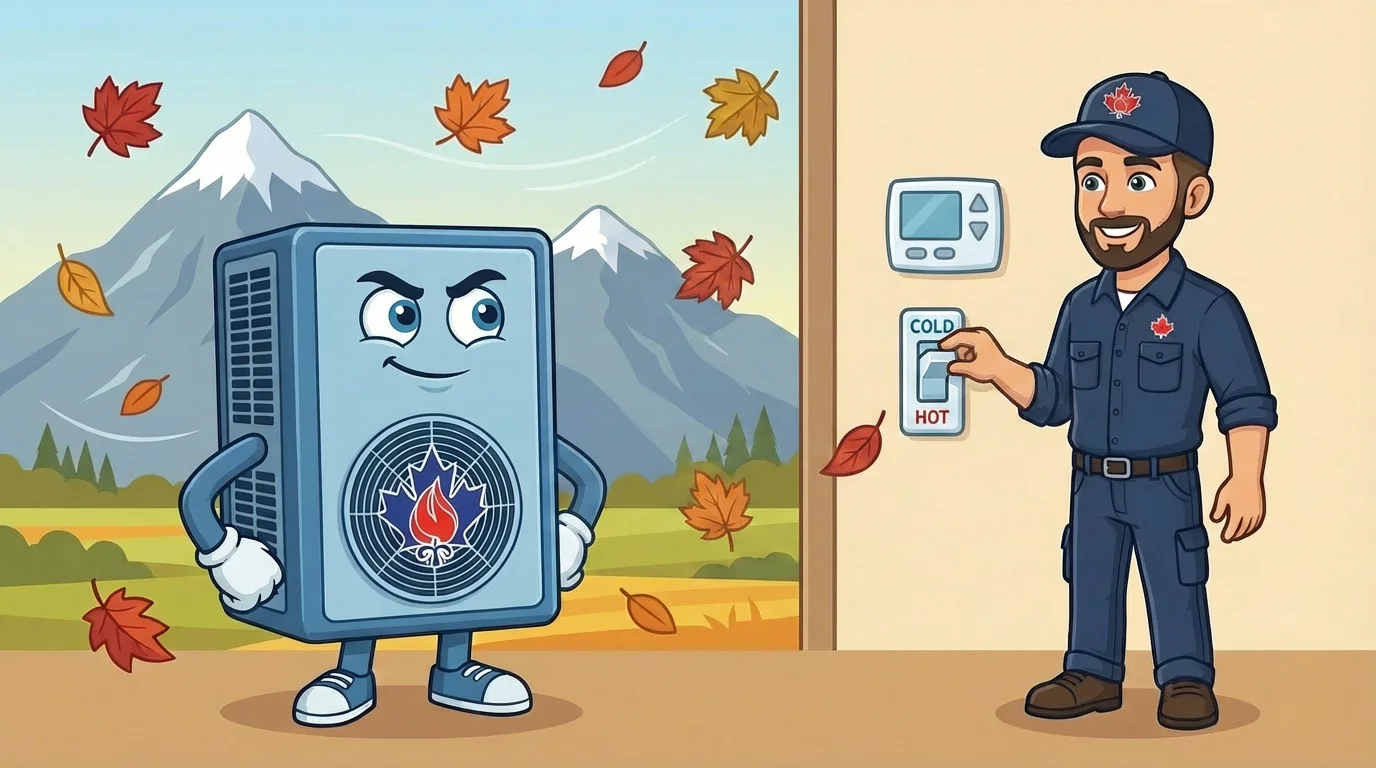
Step 2: Set the Thermostat to “Heat” Mode
On a smart thermostat: change the system mode from “cool” or “auto” to “heat.” On a programmable thermostat: same operation, usually a single button toggle.
Step 3: Raise the Setpoint Above Current Room Temperature
Set the heating setpoint to 22°C or 23°C - high enough to trigger an immediate call for heat regardless of current room conditions.
Step 4: Listen and Watch
Walk through what should happen:
- Within 30 seconds: indoor blower starts, outdoor compressor engages
- Within 1 to 2 minutes: warm air at supply registers (initial temperature may be cool, ramping up)
- Within 5 to 10 minutes: full heating output, supply temperature 25 to 35°C above room temperature
- Outdoor unit: compressor running, fan running, frost-free operation
Step 5: Run the System for 30 Minutes
Let it complete a full heating cycle. Listen for unusual sounds (banging, hissing, repeated short-cycling). Check supply registers in multiple rooms - they should all be delivering similar warmth.
The Five First-Heat Failure Modes
1. Stuck Reversing Valve
The most common issue, and usually the most expensive. The reversing valve has not moved in months. Coil corrosion, debris on the valve seat, or a sticky solenoid can prevent it from fully shifting from cooling to heating position.
Symptom: System engages, blower runs, but supply air is cool or barely warm. Outdoor compressor runs but the unit is essentially in cooling mode while you are calling for heat.
Fix range: A partial stick can sometimes be cleared with a light tap on the valve body or by cycling the system through cooling and heating multiple times. A full stick usually requires service - $300 to $700 if the solenoid coil is at fault, $1,200 to $2,500+ if the valve body itself needs replacement.
2. Defrost Cycle Failure
Heat pumps in heating mode periodically reverse briefly to defrost the outdoor coil. If the defrost board, defrost thermistor, or defrost timer is faulty, the coil can ice over and the unit’s heating output collapses.
This usually does not show up on the very first heat cycle - it shows up on the third or fourth heating call, after the coil has had a chance to accumulate frost. But the conditions for the failure exist from day one of heating mode.
Symptom: Heating works fine for the first day or two, then output gradually weakens. Visible ice on the outdoor coil that does not melt off during operation.
Fix range: $200 to $600 depending on which defrost component is at fault.
3. Failed Auxiliary Heat Strips
Most Pitt Meadows heat pumps have electric auxiliary heat strips for backup heat during cold snaps or defrost cycles. These strips sit unused for 6+ months and develop open-circuit failures or burned-out contactor terminals.
Symptom: The thermostat shows “AUX HEAT” indicator, but supply air does not get noticeably warmer than heat-pump-only operation. On extended cold mornings, the home cannot recover from setback temperatures.
Fix range: $200 to $500 for contactor or strip replacement.
4. Outdoor Unit Obstructions
Summer accumulates leaves, grass, garden debris, and sometimes small animal nests around the outdoor unit. In cooling mode, these obstructions reduce efficiency. In heating mode, they can prevent the unit from operating safely.
Symptom: System short-cycles or shuts down with high-pressure or low-airflow fault codes. Visible debris around or inside the outdoor cabinet.
Fix: Free, except for time. Clear debris within 60 cm of the outdoor unit, brush off the coil, and trim any plant growth back. This is the highest-leverage DIY task in the entire transition checklist.
5. Thermostat or Wiring Issues
Less common but worth checking: thermostat configuration sometimes drifts during the cooling season, especially in homes where the thermostat was reset, replaced, or had its batteries changed. The “heat” mode may be calling for the wrong stage, or the auxiliary heat lockout temperature may be set incorrectly.
Symptom: Heat pump runs, but auxiliary heat never engages even on cold mornings. Or auxiliary heat runs constantly even when heat pump alone could handle the load.
Fix: Thermostat reconfiguration. Free if you have your manual; $100 to $200 service call if you need help.
What to Test Before Relying on Heat
- The basic heating cycle - 30-minute run as described above. Should produce strong, even warm air at every register.
- Auxiliary heat engagement - Most thermostats have a manual “Em Heat” or “Aux Heat” mode for testing. Engage it briefly (30 to 60 seconds) and verify the strips heat up. You should hear a faint click and feel warmer-than-normal supply air.
- Defrost cycle - Cannot be reliably tested on demand, but if you run the system through several heating cycles over a few days, you should hear the unit briefly reverse (compressor sound changes, indoor blower may pause briefly) and see frost or condensation on the outdoor coil clear up.
- Multiple zones if applicable - For homes with zoning, switch each zone individually and verify the dampers respond correctly to a heat call.
The Pitt Meadows-Specific Factors
Rural-Suburban Mix Means Larger Outdoor Unit Exposure
Pitt Meadows has a higher share of homes on larger lots, near agricultural land, or with significant tree cover compared to denser Lower Mainland cities. The outdoor unit is more likely to have accumulated debris, animal-related issues, or vegetation overgrowth during the summer than units in tighter urban yards.
Walk around your outdoor unit in early September and clear a 60 cm radius. Look for nests in the cabinet (bird, mouse, occasionally wasps - wasps are surprisingly common in cooling-only HVAC equipment because the warmth attracts them).
Agricultural Dust
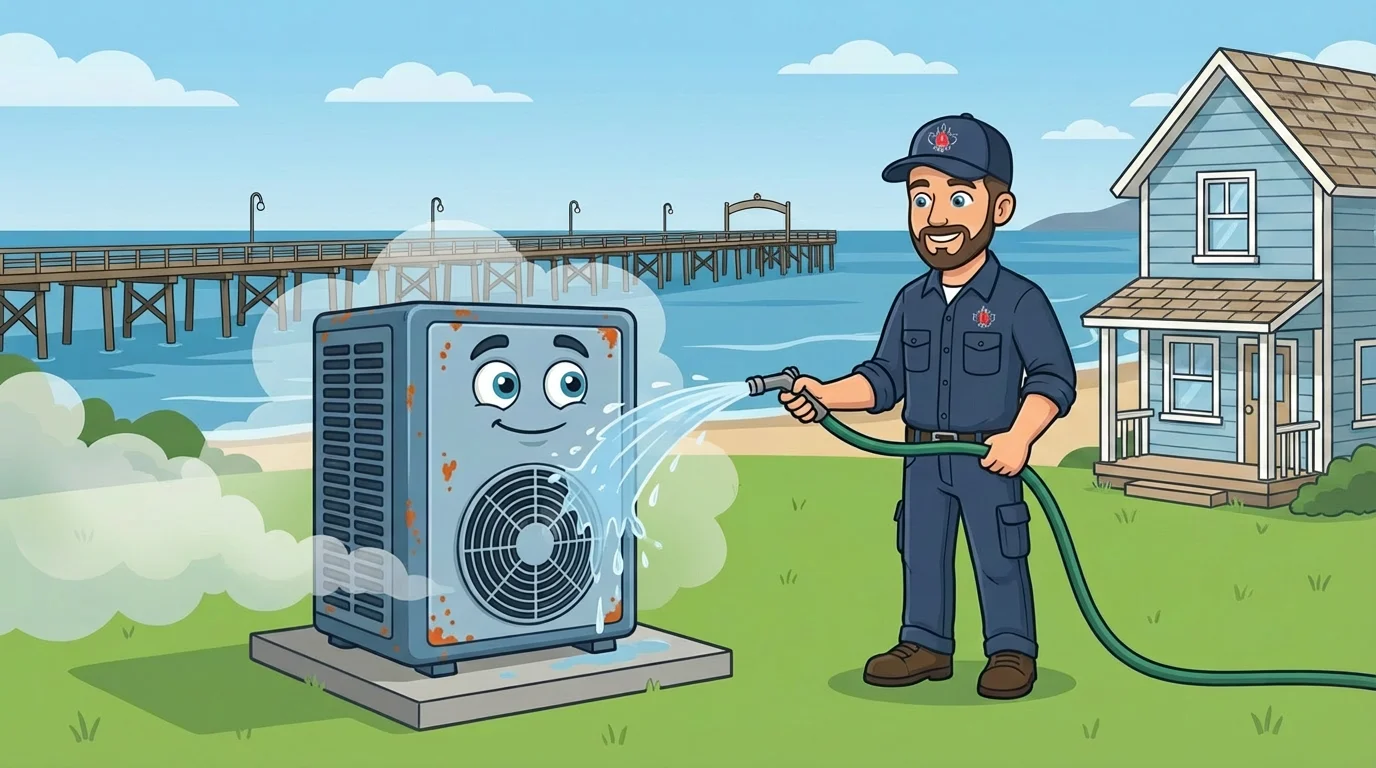
If your home is near active farmland (especially the Pitt Polder or Hammond Bay agricultural areas), summer dust and pollen accumulate on outdoor coils more heavily than in residential-only neighbourhoods. A coil rinse before the heating season is worth the 10 minutes - it improves both heating efficiency and prevents the dust from being baked onto the coil during the first hot cycles.
Older Homes With Aging Auxiliary Strips
Pitt Meadows neighbourhoods like Edith McDermott, Highland Park, and the older sections of Bonson Road have a meaningful share of homes with 12+ year heat pumps. The auxiliary heat strips on these units are statistically near end of life - the September test is the right time to catch a strip failure before you actually need it on a December morning.
Heat Pumps Paired with Furnaces
Some Pitt Meadows homes have dual-fuel systems (heat pump + gas furnace as backup). The transition is similar but adds one extra step: verify the furnace also fires correctly. Furnaces that have not run since spring can have ignition issues, blocked condensate lines, or stuck dampers that show up only on the first heating call.
When to Call a Tech (Versus DIY)
Skip the DIY transition test and book a service visit if:
- It has been more than 18 months since your last professional maintenance
- Your unit is over 10 years old
- You noticed any unusual behaviour during summer cooling (short-cycling, ice buildup, unusual sounds)
- The DIY test reveals any of the failure modes above
- Your auxiliary heat is not engaging when manually tested
A pre-fall heat pump tune-up in Pitt Meadows runs $180 to $280 and addresses the deeper checks: refrigerant pressures, electrical connections, coil cleaning, defrost board diagnostic, and auxiliary heat verification.
Bottom Line
The September cool-to-heat transition is the single most overlooked HVAC maintenance moment of the year. Thirty minutes of deliberate testing in mid-September catches problems that would otherwise reveal themselves on the worst possible morning - the first cold snap of fall.
For Pitt Meadows homeowners, the priorities are clear: clear the outdoor unit of summer debris, run a 30-minute heat cycle, test auxiliary heat manually, and watch for the first sign of any of the five failure modes above. If anything surfaces, address it now while service availability is still good - October books up fast as colder weather arrives.
If you want a tech to handle the transition test and tune-up together, call 604-991-4894 or send us a message. We service Pitt Meadows daily and can usually book within a week through September.
Frequently Asked Questions
Mid-September is the right window. By the second week of September, Pitt Meadows nights drop into the low teens, which is enough temperature differential to actually test heating performance. Switching earlier wastes the test on conditions that do not stress the system; switching later runs the risk that any first-heat failures are discovered during a real cold snap.
The reversing valve switches refrigerant flow direction between cooling and heating. After 4 to 5 months of cooling-only operation, the valve can stick partially or fully when called to switch to heating. Symptom: the system engages and runs, but supply air is cool or only mildly warm. Fix range is $300 to $2,500 depending on which component of the valve assembly has failed.
Most thermostats have an "Emergency Heat" or "Aux Heat" mode in the system settings. Engage it briefly (30 to 60 seconds) on a cool morning. You should hear a faint click as the contactor engages and feel noticeably warmer supply air than heat-pump-only operation produces. If nothing changes, the strips or contactor likely need service before winter.
Heating mode uses a different refrigerant flow path, different controls, different defrost logic, and (on most systems) different auxiliary equipment than cooling mode. Components that sat idle for months can develop problems that only appear when called into service. The September test is a 30-minute insurance policy against discovering problems on the first cold morning of fall.
Standard fall tune-ups run $180 to $280 in Pitt Meadows. The visit covers refrigerant pressures, electrical connections, coil cleaning, defrost board diagnostic, auxiliary heat verification, and thermostat calibration. Heat pumps that get an annual fall tune-up typically deliver 2 to 4 more years of useful life than units that only get reactive service.
Yes. Summer debris on the outdoor coil reduces both heating efficiency and defrost effectiveness, and once the coil heats up during the first cycles, accumulated dust can be baked onto the fins permanently. A 10-minute brush-and-rinse before the season starts is one of the highest-leverage DIY tasks for Pitt Meadows homeowners.