The 30-Minute Pre-September Reset
September arrives fast. Lunches, drop-offs, after-school sports, work routines kicking back into gear - the household pace doubles overnight. The last thing you want during that stretch is a furnace that fails on the first cool morning, a thermostat schedule still set for July vacation mode, or filters so clogged that the upstairs bedrooms are still 3 degrees too warm at bedtime.
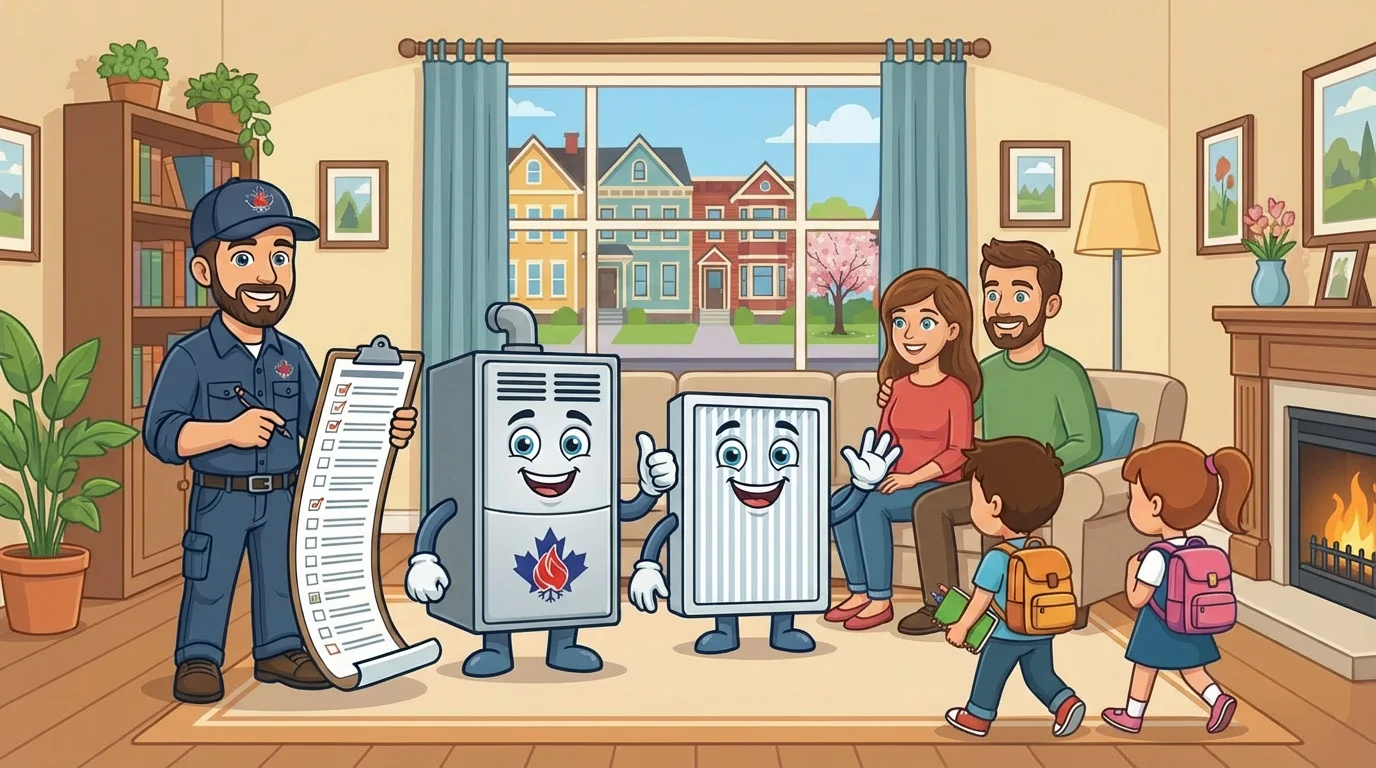
This post is a 30-minute checklist designed for New Westminster families who want their HVAC handled before the back-to-school chaos starts. The goal is not a perfect maintenance audit - it is the small set of high-leverage checks that prevent the most common back-to-school HVAC complaints.
Why HVAC Matters More When School Starts
Three things shift in your home in early September:
- Indoor air quality becomes a kid-health factor. Schools are notorious cold-and-flu incubators. Healthy indoor air at home compresses recovery times and reduces secondary household transmission.
- Heating starts cycling on. New Westminster nights drop into the low teens by mid-September. Your furnace or heat pump runs for the first time in months, and small problems that were hidden by cooling-only operation surface fast.
- Schedules and comfort needs change. The setpoints that worked when everyone was home all summer rarely match the morning-rush, empty-house, after-school routine.
The 30-minute checklist below addresses all three.
The 5 Fast Checks (10 Minutes Total)
1. Filter Swap
The single highest-leverage HVAC check in any household. A clogged filter reduces airflow, drives up heating bills, and recirculates more allergens.
- Pull your current filter. If it looks dark grey or has visible dust accumulation, replace it.
- For families with school-age kids, MERV 11 is the sweet spot - good filtration without restricting airflow on most residential systems.
- Households with allergies or asthma can step up to MERV 13, but verify your system can handle it (older furnaces sometimes cannot).
Most New Westminster homes need a filter change every 60 to 90 days. If you cannot remember the last swap, do it now.
2. Thermostat Schedule Update
Summer vacation schedules often left thermostats at single setpoints all day. Update for the new routine:
- Morning rush (6:00 to 8:30): cooler setpoint - 19°C is comfortable for getting ready
- Empty house (8:30 to 15:30): setback to 17 to 18°C in heating, 25°C in cooling
- After-school and evening (15:30 to 22:00): comfort setpoint, 20 to 21°C
- Overnight (22:00 to 6:00): bedroom-comfort setpoint, 18 to 19°C
If you have a smart thermostat with a schedule app, this takes 5 minutes. If you have a programmable thermostat, give yourself 10 minutes for the screen interface.
3. Vacuum Every Register and Return
Pet dander, dust, summer dirt - all of it accumulates at registers over the cooling season. Vacuum each supply register and especially each return air grille. Five minutes for a typical home.
Pay extra attention to bedroom returns if anyone in the household has allergies or asthma.
4. Humidity Check
Indoor humidity should sit between 30 and 50 percent for comfort and IAQ. Below 30 percent in winter is too dry (sore throats, static, dry skin); above 50 percent in summer or shoulder season encourages mould and dust mites.
If you have a humidity reading on your thermostat, glance at it. If not, a $15 hygrometer is a worthwhile household investment - especially for families with kids prone to nosebleeds, eczema, or asthma.
5. CO Detector Test
Your furnace will start heating soon. Carbon monoxide detectors save lives only if they work. Push the test button on every CO detector in the house. Replace batteries if needed. Replace any detector older than 7 years (CO sensor sensitivity degrades over time even when the unit appears to function).
Two minutes. Non-negotiable.
The 20-Minute Deeper Checks
Inspect Your Outdoor Unit
If you have a heat pump or central AC, walk to the outdoor unit. Look for:
- Leaves, grass clippings, or debris pressed against the coil
- Anything blocking airflow within 60 cm of the unit
- Visible damage to fins or wiring
Clear debris with a soft brush or a garden hose on low pressure (do not use high pressure - it bends fins). Trim any plant growth back to give the unit clear airflow.
Check the Furnace or Air Handler Area
Walk to your mechanical room. Look for:
- Anything stored within 1 metre of the equipment (clear it)
- Visible dust on the burner area or air handler cabinet
- Water staining around the condensate drain or floor
If you see water staining you have not noticed before, that is a service call - condensate drain backups are a leading cause of late-summer flooding.
Test the System in Heating Mode
Even if it is still warm enough that you do not need heat, run a brief heating cycle:
- Set the thermostat to “heat”
- Raise the setpoint above current room temperature
- Listen for the system to fire up - blower, gas valve click, heat exchanger warming, or heat pump compressor engaging
- Verify warm air at the registers within 5 to 10 minutes
Catching a heat-mode failure in late August is dramatically better than discovering it on the first cold morning in September. New Westminster heat pumps that summered in cooling-only mode occasionally have stuck reversing valves that only show up on the first heating cycle.
What’s Specifically Important for New Westminster Homes
Older Heritage Homes Around Queens Park
Heritage and character homes in New Westminster’s older neighbourhoods (Queens Park, Brow of the Hill, Glenbrooke North) often have HVAC systems retrofit into spaces never designed for them. The result: poor airflow distribution, returns in unusual locations, and ductwork that is more vulnerable to leakage than newer builds.
For these homes, the back-to-school check is also a good moment to schedule a fall maintenance visit if you have not had one in 18+ months.
Newer Highrise and Townhouse Builds in Sapperton and Downtown
If you live in a newer condo, townhouse, or duplex with shared mechanical systems, the back-to-school checklist is shorter:
- Filter swap (still your responsibility unless your strata covers it)
- Thermostat schedule update
- CO detector test
The strata typically handles outdoor unit, furnace area, and major maintenance. Confirm what is and is not covered if you are unsure.
Multi-Generational Households
New Westminster has a higher-than-average share of multi-generational households. The back-to-school check is a good time to verify that the HVAC system can keep up with the realistic demand: more bodies in the house all day in fall and winter generally means higher heating load, more humidity, and more rapid filter loading.
If your filter goes from clean to clogged in 30 days instead of 90, that is a signal you may need a higher-grade filter or a system tune-up to handle the load.
When to Call a Tech Instead of Doing the Checklist Yourself
Skip the DIY checklist and book a fall service visit if:
- It has been more than 18 months since your last professional maintenance
- You noticed any unusual sounds during summer cooling (rattles, squeals, banging)
- Your bills jumped significantly compared to prior summers
- You have new household members with serious respiratory conditions
- The system fails the brief heating-mode test in step 3 above
A standard fall maintenance visit is $150 to $250 in New Westminster and addresses the deeper checks the checklist cannot - combustion testing, refrigerant pressures, electrical connections, and condensate system flushing.
Bottom Line
The back-to-school HVAC reset is not a major project. Thirty minutes of high-leverage checks - filter, thermostat, registers, humidity, CO detectors, and a brief heating-mode test - prevents the most common mid-September comfort and IAQ complaints in New Westminster homes.
Do it the weekend before school starts and you will not have to think about HVAC again until the first real cold snap. If anything in the checklist surfaces a concern, call 604-991-4894 or send us a message. We service New Westminster daily and can usually book a fall tune-up within a week in late August.
Frequently Asked Questions
Every 60 to 90 days during heating and cooling seasons, more often if anyone in the household has allergies or asthma. MERV 11 is the right balance for most households with school-age children - good filtration without restricting airflow. Step up to MERV 13 only if your system can handle the higher pressure drop.
A typical schedule: 19C during morning rush, setback to 17-18C heating or 25C cooling when the house is empty, 20-21C in the after-school and evening window, and 18-19C overnight. Smart thermostats handle this automatically once configured; programmable thermostats need a manual schedule update.
Yes, briefly. A 5-to-10-minute heating cycle in late August catches problems that were hidden during cooling-only operation - stuck reversing valves on heat pumps, ignition issues on gas furnaces, or blower problems. Catching them in August is dramatically less stressful than discovering them on a cold September morning.
Push the test button on every CO detector in the house. The unit should beep loudly. Replace batteries on a beep-but-weak response. Replace the detector itself if it is older than 7 years - CO sensor chemistry degrades over time even when the unit still appears to function. Most modern detectors have an end-of-life chirp that signals replacement is due.
30 to 50 percent. Below 30 in winter causes dry skin, sore throats, and static; above 50 encourages mould and dust mites. New Westminster homes with poor air sealing often run dry in winter - a whole-home humidifier paired with the furnace solves this for $1,500 to $2,800 installed.
Late August through October is the right window. Booking before September keeps you ahead of the seasonal rush; booking in October still works for most New Westminster homes but availability tightens as cold weather arrives. Skip the DIY checklist and go straight to a tune-up if it has been over 18 months since your last service.